Aug/Sep edition of Eleven Says, the Newspaper of the Bramerton Group of Churches covering 11 Parishes.
News and Events
This website previously posted some info on the planning proposals contained in the village clusters housing allocation plan:
https://alpingtonwithyelverton.com/2021/06/22/village-clusters-housing-allocation-plan-consultation/
Which was a while ago. If you saw it and decided to come back to it later, the deadline for any comments/objections is the 2nd August, a couple of days’ time. So this is just a friendly reminder in case you’d regret missing it.
The practicalities of adding comments are below:
Log in (If you have not already got an account you will need to create one which is quick and easy to do):
https://south-norfolk.oc2.uk/document/1/100
Scroll down and click on: Alpington, Yelverton and Bergh Apton:

Scroll down until you come to the questions in purple. Click on the message icon which will give you opportunity to object, then click Next and make your comments:

Thanks to a very helpful Nextdoor member for those details and screenshots, hopefully she wouldn’t mind us reproducing them here.
Well, our Summer certainly arrived in July with prolonged spells of hot and dry weather, hopefully you will have found some time to relax in your gardens in this time! August is the month to busy ourselves keeping our gardens tidy and cutting back early summer flowering plants. We can also continue to harvest some of our vegetables.
Harvesting
If you have grown vegetables, you may already be picking your sweetcorn, tomatoes, cucumbers, peas, beans, courgettes and other greenhouse crops. As pumpkins and butternut squashes come on, if you place straw or old tiles under the ripening vegetables this will stop them rotting on the soil surface.

Pick sweet peas regularly to encourage new flowers to form.
Supporting
Tie in or support tall late-summer perennials to stop them leaning or falling over.
Pruning back
Lavender, Rosemary and Dianthus will be finishing flowering by now, so lightly trim them by cutting off the old flower heads and stalks but try not to cut into the older brown wood. Sprawling Geraniums which are nearing the end of their flowering can also be cut back as this will encourage a second flush of leaves and flowers. Continue to dead-head Roses.
Prune any shrubs that have finished flowering. Cut back established Wisterias, trimming long growth back to between 4 and 7prs of leaves and pinching out the tips of the unwanted fast growing new young shoots and trim fast-growing hedges to keep them in check.
Watering

Water all pots, baskets and flower beds well in dry spells, ideally from collected rain water or with used bathwater. Dark-coloured, smaller or metal patio pots will dry out rapidly in the heat, so these may need watering twice a day.
Mowing
Mow the lawn weekly but raise the blades if the weather is hot and dry to prevent the grass turning brown.

We will always find things to do in our gardens but we have created them to enjoy them, so hopefully August will be a month of Summer socialising with family and friends in our outdoor spaces.
Some information on this event from South Norfolk Council:
In preparation for this year South Norfolk Community Awards we are now taking nominations for residents within our district.

The awards recognise and celebrate the outstanding achievements of residents from across the district, who go above and beyond to support others or complete incredible achievements.
Nominations will close on 5th September so we would really like to get this advertised soon to allow time for anyone to complete the nomination process.
The information poster is downloadable here:
We are keen to encourage the community to put in a nomination for someone (or group) who has had a huge contribution to the community this year.
There are several category descriptions and further information found on the website
We are really excited to see what your community has to offer and the nominations that come in.
Kind regards
Olivia Walker
Event and Communities Support Officer, South Norfolk Council
In this Parish, if you have a phone, you are very likely to receive regular scam calls. Thankfully they don’t seem too sophisticated mostly. You’ll have heard the delayed robotic voice telling you your internet’s going to be cut off on a regular basis, and hung up.
But would you hang up as readily if it was a real person ringing you and telling you the same thing? It’s not always obvious. See below for some info from the Neighbourhood Watch Network which might just save you a load of money.
The Neighbourhood Watch Network are running weekly webinars in July to expose the truths behind scams.
The webinars are FREE to attend and are open to anyone who would like to know more about scams, the psychology behind scams, prevention and how a fraud case is investigated.
The webinars bring together experts in their field relating to online fraud, a topic which we are all too familiar with and can affect anyone and everyone, as our lives are played out more digitally.
You can find out more and register for the webinars here >
“A nature trail like none other, a combination of the natural world and the world of the arts“
One for the Rook – 8-12 & 22-26 September 2021

Bergh Apton will be hosting a nature trail based arts event in September which looks really interesting, and just round the corner from us. It’d be well worth a visit, you need a ticket to attend and it’s sure to be popular based on past events, so make sure you plan ahead and get a ticket early.
One of the most unique aspects is you need to bring a smartphone with a QR reader, to be able to interact with the experiences, music, readings, and puzzle.


It’s about 1.5 miles, over rough and muddy ground, so you’ll need appropriate footwear.
Here’s the website: https://bacat2021.wixsite.com/bacat/one-for-the-rook
Here’s the flyer with the full info:
From their promotional material:
One for the Rook has been three years in the planning and our aim is that it will work even should limited COVID restrictions be in place.
The Trail will provide opportunities to “Stop, Look and Listen” not only to the world around us of which we are but a part, but also to words and music – creative responses to our “neighbours” who live alongside.
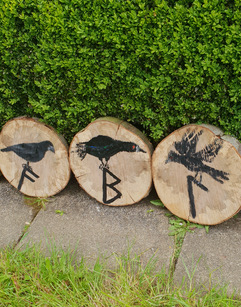
We have been assisted by the renowned story-teller Hugh Lupton, the music composer, Mary Lovett, the Land Artist, Liz McGowan and with creative assistance and direction from Charlotte Arculus.
All this inspired by the beautiful books of Robert Macfarlane and Jackie Morris such as “Lost Words” and “Lost Spells”.
Bergh Apton Arts is a not-for-profit Trust that has, since 1997, staged successful events such as Sculpture Trails and Plays.
From Alpington, if you are driving to the recycling center, at the junction where you turn right at the Bergh Apton village hall there will be a road closure. It says from that junction going the other way, and is unclear at first glance whether it’ll affect the junction itself (in other words I’m not clear whether you’ll still be able to turn towards the recycling center).
From the official notice:
NORFOLK COUNTY COUNCIL has made a Temporary Traffic Order affecting the C374 Cookes Road from its junction with U76329 The Street for 300m eastwards in the PARISH OF BERGH APTON because of BT remedial works.
The road will be temporarily closed (except for access) from 26th to 27th July 2021 for the duration of the works expected to be about 2 days within the period.
Hopefully, July will be warmer and sunnier than it has been of late and we will be able to sit in our gardens and enjoy the fantastic display of flowering plants and shrubs very soon.
The obvious downside to all the recent rain is that although we have vigorous garden growth and our gardens look lush and green, we also have amazing weeds too!
Weeding, feeding and dead-heading
Control the weeds on paths and pull out weeds in your flowerbeds. Increase the feeding of seasonal patio pots and baskets – they will benefit from a weekly feed of liquid tomato fertiliser or liquid feed.
Dead-head bedding plants, annuals and Roses as this will encourage more flowers. If you cut back delphiniums and geraniums after the first flowers they should flower a second time, so give them a feed of Blood, Fish and Bone or a slow-release fertiliser.
If we are forecast some windy days, support or tie in any vigorous climbers or tall perennials to prevent damage.
Watering
We hope July will bring some hot Summer weather, so increase the watering for the plants if they need it.
Bedding plants, leafy vegetables, seedlings and new plantings and plants in pots are most prone to drying out. If possible, water your plants early in the morning or in the evening and avoid watering during the hottest part of the day.
Protecting from disease or pests
Some diseases and pests thrive in hot summer conditions, so check susceptible plants – such as roses – for issues such as blackspot, mildew and rust. Treat and spray as required.
Water features
If you have a pond, rake out any overgrown oxygenating plants and algae, topping-up the water levels using rainwater collected in your water-butts if you can.
Mowing
If the weather is hot and dry, try not to mow too often and raise the height of cutting deck on your mower.
Brown patches on lawns in hot spells are inevitable but the lawn will recover quickly, so there’s no need to water. It’s better to use the water for your pots, baskets and flowering borders.
Painting and refreshing
Warm, dry summer weather is perfect for painting wooden sheds, fences, arches and arbours. There are lots of traditional and other vibrant colours on the market to brighten or refresh any wooden structure in your garden.
You can see a poster below, detailing the new Priorities set for the Poringland Safer Neighbourhood Team at their recent online Priorities Setting Meeting.
- Burglary/Theft
- Speeding
- Violent crime

The Poringland Safer Neighbourhood Team website is here if you are interested (interestingly not updated yet with the new priorities above).
https://www.norfolk.police.uk/your-area/poringland
The area covered is Poringland and a number of surrounding Parishes, including ours.
Not exactly local! But might be of interest to some residents:
From Georgia Kossowicz
Programming and Partnerships Officer, The Norfolk Coast and Broads National Trust
Calling all History Buffs!

Are you passionate about the past? Are your friends and family fed up with hearing yet more about your historical interests? Then look no further, we are searching for enthusiastic volunteers to share Horsey Windpump’s story with our visitors!
One of 240 windpumps dotted over the Norfolk Broads, for many decades Horsey Windpump has been a prominent visual link with the history of the Norfolk Broads.
It has withstood floods, fierce storms, wars and a lightning strike that finally put it out of action in summer 1943. A huge restoration project has been undertaken since 2015, and finally, a fully functioning windpump is on the horizon!
You’ll be joining a friendly team with a wealth of historical knowledge. Our windpump volunteers engage our visitors with tales of Horsey’s history, share in the delights of working with others and there are always opportunities to help with fundraising, special events and anything else you may have an interest in. If you’re able to spare some time, you can sign up directly on the national trust website- myvolunteering – National Trust and search for Horsey (click on ‘more details’ below Windpump Volunteers article).
Or get in touch with us at the following email addresses;
Marianne.lawrence@nationaltrust.org.uk
Georgia.kossowicz@nationaltrust.org.uk
We hope to see you there at this exciting time for Horsey Windpump!

