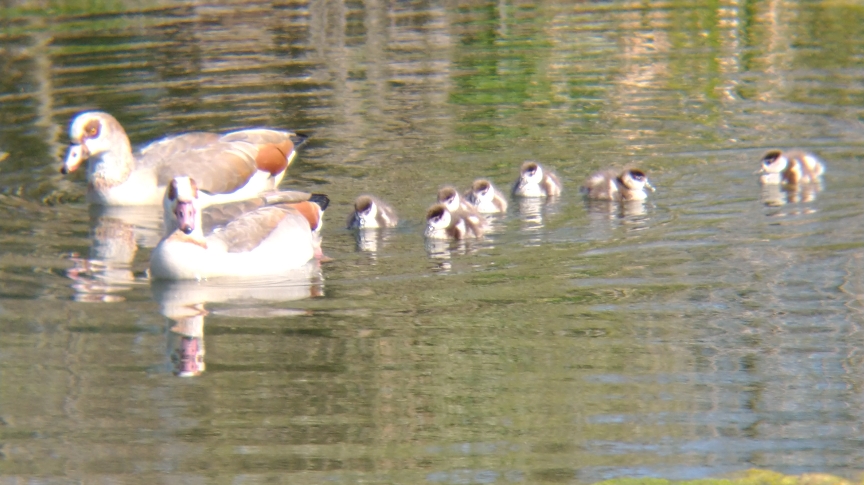
This year Yelverton pond has been home to a family of Moorhens and a family of Egyptian Geese. Originally we counted 5 moorhen chicks, and 6 Egyptian Geese chicks.
Newly hatched chicks in mid-April
As these things often go with wild birds, most of the chicks seem not to have survived, as far as we know it’s been because of natural predators getting them, which is a shame for the birds but all perfectly normal of course.
But some have thrived and made it.
Moorhen loves own reflection too much
There were 3 grown up young moorhens on the pond yesterday, foraging around, which was great to see.
This author believes the whole first clutch of 5 chicks didn’t make it, a new nest was built on the central island instead of by the road, and these 3 are from that second attempt. It was obviously a more secure location.
The Egyptian Geese must be proud of this beauty! Nearly fully grown now:
Adult Goose thinks it’s about time his kid moved out and got his own place.
Elsewhere, we’ve heard of mallard ducks having a very successful year even though they got booted off the pond by the geese. 24 chicks from two families swimming around elsewhere in the village, so that’s also good news.
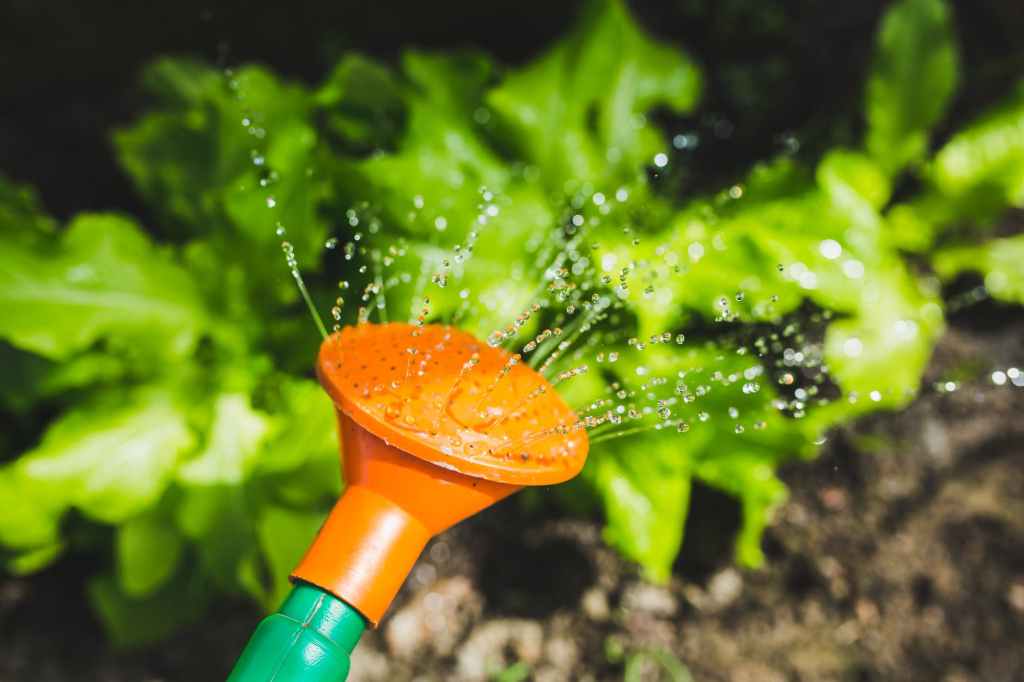
The sun has finally made a very welcome appearance and we have also had enough rain to launch our gardens into Summer mode. Now we can start enjoying our gardens while doing some ongoing weeding, watering and feeding.
Lawns
Continue to mow as needed, cutting the grass a little higher in hot dry weather.
Mulching
If your borders are in full sun and dry out quickly, consider applying a mulch of compost or bark on top of the soil between the plants to reduce water evaporation.
Feeding
Feed container plants, bedding plants and veggies. Liquid-feed tubs and baskets every two weeks if you haven’t already mixed in controlled-release fertiliser.
Bulbs
Lift Spring bulbs when their leaves have turned yellow. Put them indoors in a shallow box to dry then remove the dried leaves and store them in a cool dry shed for Autumn planting.
Greenhouses
Water the greenhouse to dampen it down in hot weather and ensure you have sufficient shading on the glass to prevent your plants from becoming scorched. Spray cucumbers with water to maintain a humid atmosphere for them. Feed tomatoes, peppers & other greenhouse crops with a high-potash feed such as Tomorite as per the instructions on the bottle.
Harvesting
June is also the time for harvesting early crops – Strawberries, salads, spring onions and radishes you sowed or planted earlier in the year. You may also have the first onions – they are ready when the leaves turn yellow.
Bring indoor plants outside for the Summer
Move any summer flowering house plants into the garden. They will brighten any patio area and benefit from the extra light.
Relaxing
Roses are at their best in June, so try to take some time to relax in your garden and enjoy the lovely space you have worked so hard to create.
Correction re Aphid treatment
In May’s Gardening Tasks, I suggested spraying roses with a washing-up liquid solution to clear greenfly. A colleague has pointed out that this is no longer recommended as many washing up liquids are not plant friendly. Please only use propriety pesticide or greenfly killer to clear greenfly in order to prevent possible damage to your plants and roses.
These tips were kindly contributed by local resident Cara MacColl
Lots of road closures at the moment! This one is 15th – 16th June, Mill road (the road out to Green Pastures. Starting at its crossroads Junction with Threadneedle St, for about 50m.
The relevant part of the official notice:
ORDER prohibiting the use by vehicles of the C375 Mill Road from its junction with C374 Threadneedle Street for 50m northwards…
Anglian Water sluice valve repair works are required at the C375 Mill Road from its junction with C374 Threadneedle Street for 50m northwards in the PARISH OF ALPINGTON
The Chances project delivers personalised employment support to people across Norfolkj. The project supports people both near to and far from work, including those seeking help with health conditions, employability skills, or a lack of self-confidence.
There will be a 10mph speed limit on a 0.6km stretch of the A146, around the Green Pastures junction, for about 1 month. 10th May to 7th June.
From the official notice:
…a 10 mph speed restriction on the A146 Loddon Road from a point 330 metres west of its junction with the C375 Back Lane for a distance of 630 metres eastwards… because of Norfolk County Council surface dressing road markings and stud installation works.
…traffic over the said road should be restricted with effect from 10th May 2021 to 7th June 2021…
April 2021 has apparently been the coldest since the 1980s and the driest for decades so fingers crossed, May will be warmer and will hopefully bring some much-needed rain for our gardens just as they surge into life for the Summer months ahead.
Mowing
It is now time for regular lawn maintenance and May is really the last chance to sow or lay new lawns until the Autumn. Even though it has been so dry, your lawn will probably need a weekly mow from now until Autumn and the edges will still need trimming.
Planting
Once the danger of frost has passed, plant out strawberries and sow runner beans outside, constructing your wigwams or cane supports for them. The end of the month is the best time to plant out tender vegetables like courgettes and the colourful summer bedding plants.
This is also a great time to re-pot any pot-bound plants in pots about 10cm bigger than the current ones. Give them a good feed and tie-in any long climber shoots to their supports with soft twine or string.
Pest Protection
As the weather warms up, the insect pests are becoming more active – so keep an eye out for them. Pick off scarlet lily beetle from your lilies (their larvae rapidly defoliate plants). Watch for vine weevil in container plantings – irregular-shaped notches to leaf edges are tell-tale signs (the young grubs in the soil eat the roots really quickly).
Check your roses for black spot, remove and discard all infected leaves on the plant to prevent it spreading. They may need spraying with a fungicide such as Rose Clear to keep it under control.
If you find aphids/greenfly on your rosebushes, as an alternative to shop-bought pesticides you can spray them with washing up liquid solution (the same strength as you would use for washing dishes) and on a cloudy day, spray the whole bush, including the tops and undersides of the leaves and buds. You may need to repeat this treatment regularly to keep your roses clear of these little creatures.
You can also now cover soft fruit bushes with netting to prevent birds eating the fruit. If you are growing strawberries, put straw or bark around or under them.
Pruning Spring-flowing shrubs
Your Spring-flowering shrubs will be finishing their flowering display so now is the time to prune these – eg:- Ribes, Weigela and Forsythia, as these all flower on this year’s growth. Prune them back into shape just after they have finished flowering to give a beautiful display next year.
Administering “The Chelsea Chop”
To check the growth of perennial plants which can grow too tall, you can make the plants branch out by cutting or pinching off the growing tips. Plants which respond well to this treatment are Rudbeckias, Solidago (Golden Rod), Heleniums, Phlox and Michaelmas Daisies. Take a pair of shears and literally chop off the top 6 inches of growth. This action will reduce the overall height of the flowing plant by about 25% and although they may flower a week or two later, as they won’t be so tall, they won’t be so prone to collapsing or being blown over.
Feeding Bulbs
Dead head your Spring flowing bulbs and then feed them with a granular fertiliser, blood, fish and bone, or Miracle Gro to give them an energy boost and help them flower next Spring.
Relaxing in your garden
Remember to take some time to sit in your garden on warmer days to relax and just enjoy the sights, sounds and atmosphere of your beautiful outside space.




 Alpington and Yelverton