Apr/May 2022 edition of Eleven Says, the Newspaper of the Bramerton Group of Churches covering 11 Parishes.
Author: alpington-yelverton-admin
Alpington with Yelverton Parish Council Website Administrator
Nexus Fostering, based in Norwich, would like to find potential new carers who can provide a child a nurturing and loving home and help give them new life experiences.
Could you foster?
Would you like to find out how you can provide a family home to children in your area?
Nexus Fostering is a well-established and highly regarded fostering agency, based in Norwich, who are urgently seeking full-time foster carers willing to foster older children and siblings.
The agency is rated Ofsted ‘Outstanding’ in all areas and place a high premium on the quality of support and care that they provide to every one of the foster carers and, in turn, the children and young people placed with them.
To find out more about becoming a foster carer in Norfolk and surrounding areas please call 01603 951405 or email foster@nexusfostering.co.uk.
Nexus Fostering has been making a difference in the lives of disadvantaged children and young people in care since 2002. There are more than 4000 children in East Anglia who are unable to live at home with their family and require foster care each year.
We’d like to say a big thank you to the kind and thoughtful Alpington Guides and Rangers, who yesterday evening delivered some lovely flowers in pots and hand-written poems as “random acts of kindness” to some residents around Yelverton and Alpington.

The residents have asked us to express their thanks for their lovely new flowers and poems… and others may find some on their doorstep this morning.
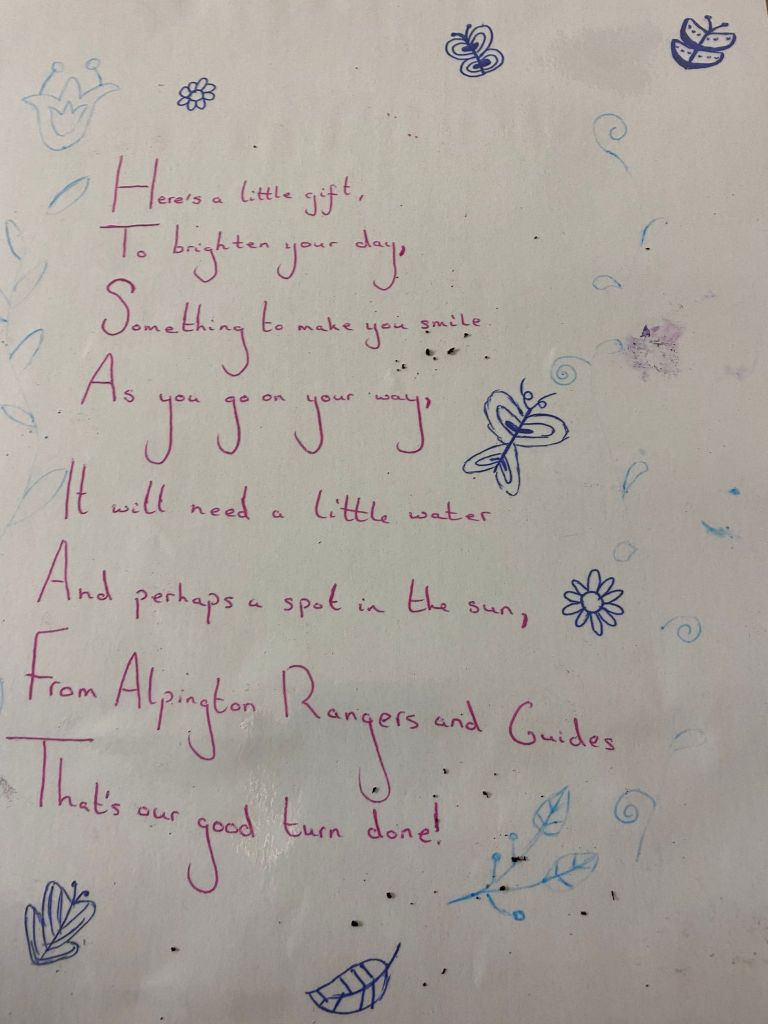
So much effort must have gone into each one of those.
Aren’t we lucky to have a group of thoughtful young women like this representing our two villages?
Many thanks to Alpington Guiding and Highways Garden Centre for donating the flowers.
Nominations are now open for South Norfolk Council’s Community Awards, celebrating the fantastic work and achievements of volunteers, community groups and businesses across the district.
The categories for this year are:
- Inspiration of the Year
- Young Hero of the Year (aged 18 or under)
- The Helping Hand Award
- Business in the Community Award
- Green at Heart Award
- Community Group of the Year
- Volunteer of the Year
- Community Hero
The winners in each category will receive £250 to put towards their chosen community group.
If you know of someone who is doing a great job, then please nominate them and help us spread the word about our awards. For more information and to nominate someone please visit https://www.southnorfolkandbroadland.gov.uk/communities/community-awards-2022
If you need any further assistance or have any queries please contact the Communities Team on 01508 533914 or email communities@southnorfolkandbroadland.gov.uk
Lets all hope the storms we had last month won’t be repeated and we can look forward to a more settled start to Spring. As the temperature starts to rise and the days continue to lengthen there seems to be more time available to get out in our gardens.
Deadhead and prune
Deadhead any early spring bulbs but try not to chop back the leaves for at least six weeks after flowering, this will enable the bulbs to give a good display next year.
If you haven’t had a chance to do so yet, hard-prune bush roses back to about 30cm, removing any dead or diseased wood, cutting back to an outward-facing bud.
Weed and mulch
Remove weeds, then mulch beds and borders with shredded bark or compost to help prevent the weeds returning and mulch around newly planted trees or shrubs.
Lawns
You should be able to start mowing your lawn regularly this month too. Try not to cut the grass too tight this month, it is best to leave the grass a little longer than normal for the first few cuts of the year.

Re-seed any worn patches of grass and repair any edges which may have crumbled over the Winter months.
Sowing & Planting
March is generally the last recommended time to plant bare-root trees, shrubs and roses until November.
Sow hardy annuals to fill gaps in flowerbeds and borders. Also sow celery, courgettes, tomatoes and cucumbers on the windowsill or greenhouse for planting out once the danger of frost has passed.
You can also plant out the Autumn-sown Sweet Peas and sow more seed to provide a fragrant display later in the year.
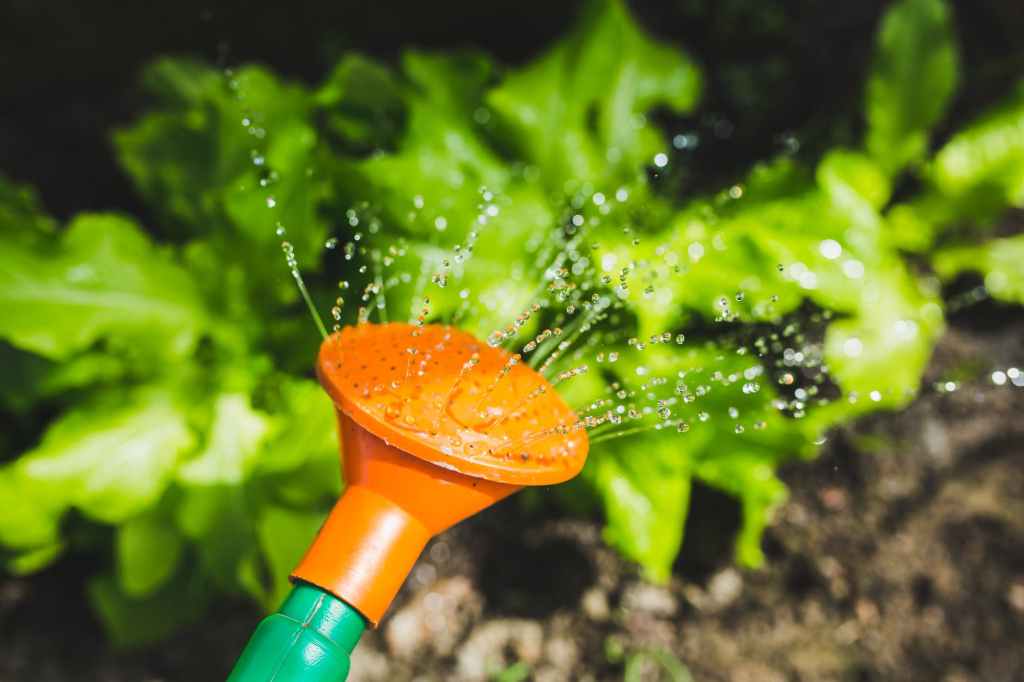
Plant herbs in windowsill trays and plant any early potatoes, onion sets and asparagus. When the weather is a little warmer at the end of the month, sow onions, parsnips and the first carrots, turnips, beetroots in the open soil under cloches and salad leaves in the greenhouse.
Dividing
Dig up and divide larger clumps of snowdrops and any other perennials you didn’t have time to divide in the Autumn.
Ponds and water plant
On a mild day, drain two thirds of the water from your pond and replace with fresh water. Remove any Algae which may have formed and clear off any old foliage from marginal plants.
Pots
Replace the top half of compost in planters and containers and top-dress with slow-release fertiliser, ready for planting .
General tasks
Weedkill those paths and driveways while the weeds are small and finish digging vegetable plots or flowerbeds.
Houseplants
Increase watering for your houseplants as the days lengthen feed with a liquid fertiliser to encourage the new growth.
Supporting your garden birds
While you are working in the garden you will hear the wonderful sound of the Spring birdsong and see lots of activity as the birds search for partners and suitable nesting sites.

We can all give them the best start to the nesting season by keeping feeders topped up and if you have a spare fat ball feeder, put some dog fur in this and watch the Great Tits tease out the fur to line their nests!
Here are some children’s activities that are being organised over the Easter school holidays.
The link below shows what is available including football and dance, where they are taking place and the cost. Some, if not all, are free to those children who receive free school meals during term time.
https://www.norfolk.gov.uk/what-we-do-and-how-we-work/campaigns/big-norfolk-holiday-fun
This is the latest “Operation Randall” newsletter from the police, from the team specialising in rural crime around Norfolk.
ALPINGTON & YELVERTON HISTORY SOCIETY
with
BERGH APTON LOCAL HISTORY GROUP
are holding a shared event on Wednesday, 30th March, at 7.30 p.m.
At Bergh Apton Village Hall, Cooke’s Road, Bergh Apton, Norwich NR15 1DF
Our speaker will be Matt Champion who will be speaking to us about
Medieval Graffiti in Norwich Cathedral
Guests £3.00 – All are welcome
After such a bright and dry end to January you have probably been able to get out in your garden when the wind wasn’t too cold and continue the pre-Spring tidy-up. The days are also getting longer, heralding the approaching Spring season and there are already many buds forming on shrubs and roses. It is a very positive time of year!
Planting
You can now plant bare-root trees and shrubs in their final positions. Similarly, you can move or plant ‘in-the-green’ snowdrops (snowdrops with just leaves) so they will give you a beautiful show of white flowers in a week or so.
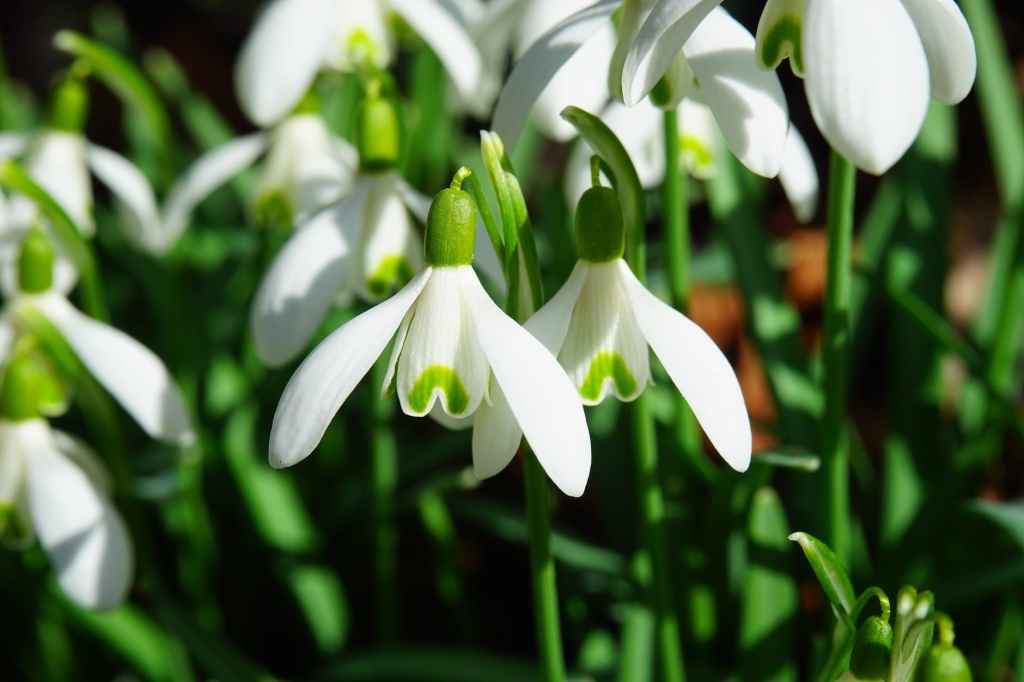
This is also a good month for planting shallots, raspberries and blackberry canes, if weather and soil conditions permit.
Make sure the frosts haven’t lifted newly-planted trees and shrubs, firm the soil around them gently with your foot if required.
Hedge cutting and Pruning
If you didn’t get a chance to prune your hedges last Autumn, February is a great time to do this. Deciduous garden hedges can all be cut back fairly hard now, before birds start looking for suitable nesting sites.

You can also cut back deciduous grasses, ideally down to 15-20cm before new shoots emerge and also deadhead any winter bedding plants for bushier displays later in the year.
Feeding flowerbeds
If you have finished clearing off the old growth from your perennials and your flowerbeds are quite tidy, you can apply a top dressing of blood fish and bone or other granular fertiliser around the plants and gently fork this into the soil.
Edging Lawns
If you can’t spend much time in he garden at the moment, neatening up the edges of your lawn or flowerbeds is the fastest way to give the impression of a tidy garden and it makes you feel that the growing season is just round the corner.
Sowing Seeds
If the weather permits, you can plant your sweet pea seeds outside where you wish them to flower but they may need to be protected with cloches. Alternatively, plant some seeds in plant pots in the greenhouse or on the windowsill to be planted out later in the spring.
Seed catalogues and garden ideas
You can get a lot of ideas for your summer garden from gardening magazines or seed catalogues, maybe finding some new varieties of striking annuals for your pots or hanging baskets. So, on any wet and cold February days, browse these catalogues or read through a gardening magazine or book for ideas for your garden.
Well-behaved and sociable dogs are needed by Norfolk Police as part of a new pilot scheme.
The scheme will provide canine visits to various locations promoting positive mental health and wellbeing in the workplace.
The volunteer role of wellbeing dog handler is available throughout the county.
You must be the owner of a well-behaved and sociable dog (subject to a dog temperament test); have an understanding and knowledge of dog welfare; good communication and engagement skills and display compassion and empathy.
To register your interest and for more information email Volunteer@norfolk.police.uk
For more information about police support volunteers go to www.norfolk.police.uk/join-us/volunteers/police-support-volunteers
 Alpington and Yelverton
